

How Reactive Power Compensation Works: Principles, Calculation and Practical Applications
Introduction
Reactive power compensation is an essential technology in modern electrical power systems. It helps improve power factor, reduce transmission losses, stabilize voltage, and enhance the overall efficiency of electrical distribution networks.
In industrial facilities, commercial buildings, substations, and renewable energy projects, electrical equipment such as motors, transformers, and other inductive loads consume reactive power. Excessive reactive power can increase current flow, cause voltage fluctuations, reduce available system capacity, and result in additional electricity costs.
Understanding how reactive power compensation works, how to calculate reactive power compensation, and which compensation technology to select is important for designing an efficient and reliable power system.
This article provides an overview of the operating principles, calculation methods, technologies, and practical applications of reactive power compensation.
1. What Is Reactive Power Compensation?
Reactive power compensation is the process of supplying or absorbing reactive power to balance the reactive power demand of electrical loads.
In AC power systems, electrical power consists of three main components:
- Active Power (P): Measured in kW, it performs useful work, such as driving motors and producing heat.
- Reactive Power (Q): Measured in kVAR, it supports the magnetic and electric fields required by inductive and capacitive equipment.
- Apparent Power (S): Measured in kVA, it represents the total power supplied by the electrical system.
The relationship between these three quantities is:
S² = P² + Q²
Power factor (PF) is calculated as:
PF = P / S = cosφ
When inductive loads operate, they typically consume lagging reactive power, resulting in a lower power factor. Reactive power compensation provides the necessary capacitive reactive power or dynamically controls reactive power to reduce the demand on the upstream power supply.
This process is also known as capacitive reactive power compensation when capacitor-based equipment is used.
2. How Does Reactive Power Compensation Work?
The basic principle of reactive power compensation is to balance the reactive power generated by inductive loads with reactive power supplied by compensation equipment.
For example, industrial motors and transformers require reactive power to establish magnetic fields. Without compensation, this reactive power must be supplied by the utility grid, increasing current in cables, transformers, and other electrical equipment.
By installing compensation devices close to the loads or at distribution substations, the system can reduce reactive power transmission over long distances.
The main operating process includes:
- Power Monitoring: A power analyzer or controller measures voltage, current, power factor, and reactive power demand.
- Reactive Power Detection: The system identifies whether the network requires capacitive or inductive reactive power.
- Compensation Control: The controller determines the required compensation capacity.
- Reactive Power Adjustment: Capacitor banks, reactors, SVG systems, or STATCOM devices supply or absorb reactive power.
- Continuous Optimization: The system adjusts compensation output according to changing load conditions.
This automatic reactive power compensation process helps maintain a stable power factor and improves power quality.
3. Main Technologies Used for Reactive Power Compensation
Different compensation technologies are suitable for different load characteristics, voltage levels, and operating requirements.
3.1 Capacitor Bank Reactive Power Compensation
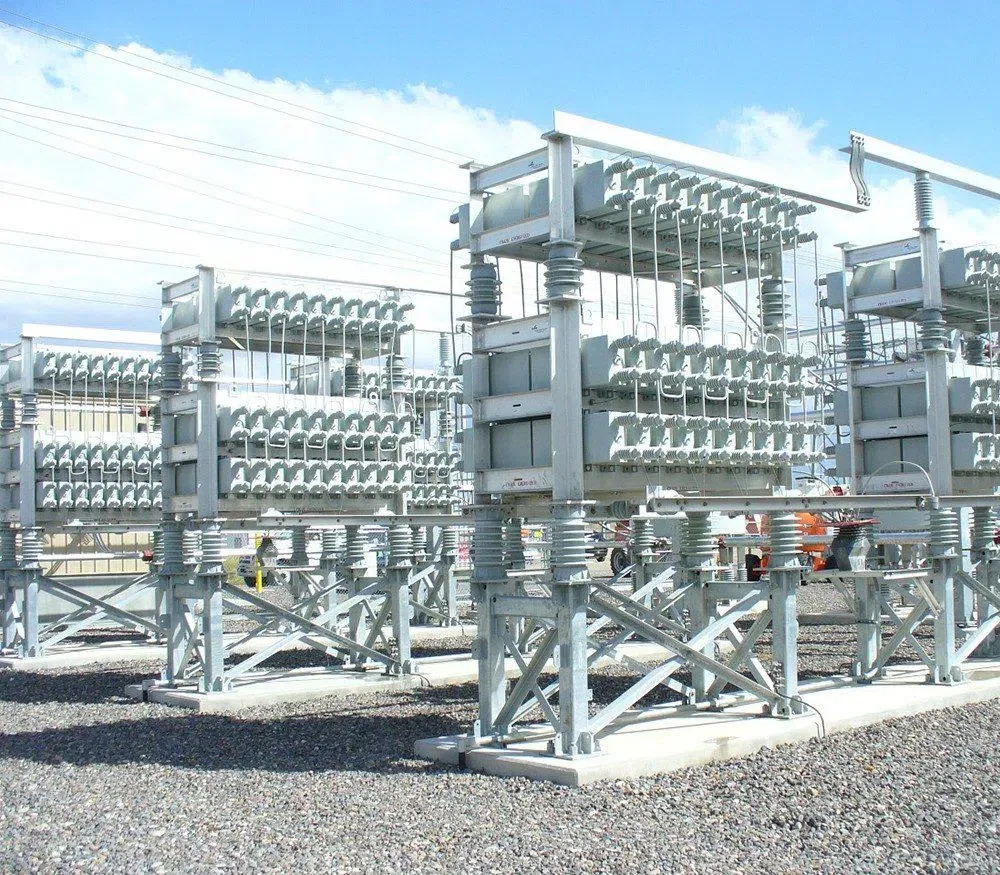
Capacitor banks are among the most widely used solutions for reactive power compensation in industrial and utility power systems.
A capacitor bank generates capacitive reactive power to offset the inductive reactive power consumed by motors, transformers, and other electrical equipment.
Typical capacitor bank reactive power compensation systems consist of:
- Power capacitors
- Switching devices or contactors
- Protection equipment
- Reactive power controllers
- Current transformers
- Discharge resistors
Capacitor banks for reactive power compensation can be installed in low-voltage distribution panels, medium-voltage switchgear, and substations.
A capacitor bank substation reactive power compensation system is commonly used in power distribution networks to improve voltage profiles and reduce reactive power flow.
Advantages:
- Relatively low installation cost
- Simple operating principle
- High energy efficiency
- Modular capacity expansion
- Suitable for fixed and automatic compensation
However, conventional capacitor banks may have limited response speed and can be affected by harmonic distortion. Proper harmonic analysis and protection design are therefore important.
3.2 Automatic Reactive Power Compensation System
An automatic reactive power compensation system uses a controller to switch capacitor stages according to the actual reactive power demand.
When the power factor decreases, the controller activates additional capacitor stages. When the reactive power demand decreases, unnecessary capacitor stages are disconnected.
This automatic reactive power compensation solution is particularly suitable for factories with changing loads, such as manufacturing plants, pumping stations, and commercial buildings.
Modern systems can also integrate harmonic protection, intelligent monitoring, and remote communication.
3.3 SVG and STATCOM Reactive Power Compensation
Static Var Generators (SVG) and Static Synchronous Compensators (STATCOM) use power electronic converters to provide dynamic reactive power compensation.
How the reactive power compensation is done using STATCOM:
A STATCOM is connected in parallel with the electrical network through a coupling transformer or reactor. It regulates the magnitude and phase relationship of its output voltage to control reactive power exchange with the grid.
- When the system requires capacitive reactive power, the STATCOM supplies reactive power to the network.
- When the system requires inductive reactive power, it absorbs reactive power from the network.
- Its output can be adjusted rapidly to respond to changing load conditions.
Compared with conventional capacitor banks, SVG and STATCOM systems provide faster and more flexible dynamic compensation.
They are widely used in steel plants, mining facilities, electric arc furnace applications, renewable energy projects, and other installations with rapidly fluctuating loads.
3.4 APF Reactive Power Compensation
An Active Power Filter (APF) is primarily designed to reduce harmonic distortion in electrical systems.
It detects harmonic currents generated by nonlinear loads and injects compensating currents to reduce harmonic pollution.
Some APF solutions also provide reactive power compensation, helping improve power factor while reducing harmonics.
For facilities with both harmonic distortion and reactive power problems, combining APF and SVG technologies can provide a more comprehensive power quality solution.
4. How to Calculate Reactive Power Compensation
Accurate calculation of reactive power compensation is essential for selecting the appropriate capacitor bank or dynamic compensation system.
The required compensation capacity depends mainly on:
- Existing active power (kW)
- Existing power factor
- Target power factor
- Operating load conditions
The standard calculation formula is:
Qc = P × (tanφ₁ − tanφ₂)
Where:
- Qc = Required reactive power compensation (kVAR)
- P = Active power (kW)
- φ₁ = Initial power factor angle
- φ₂ = Target power factor angle
Calculation Example
Assume an industrial factory has:
- Active power: 500 kW
- Existing power factor: 0.75
- Target power factor: 0.95
First, calculate the tangent values:
tanφ₁ = tan(cos⁻¹0.75) ≈ 0.882
tanφ₂ = tan(cos⁻¹0.95) ≈ 0.329
Then calculate the required compensation capacity:
Qc = 500 × (0.882 − 0.329)
Qc ≈ 276.5 kVAR
Therefore, approximately 276.5 kVAR of reactive power compensation is required under the assumed operating conditions.
In practical projects, engineers may select a suitable standard capacitor bank rating, such as 300 kVAR, after considering load variation, harmonic conditions, switching steps, and the possibility of overcompensation.
This method is commonly used to calculate reactive power compensation for industrial power distribution systems.
5. Practical Applications of Reactive Power Compensation
Reactive power compensation has a wide range of applications in industrial and utility power systems.
Industrial Manufacturing Plants
Factories using large motors, compressors, pumps, and production machinery often have significant inductive loads.
Installing capacitor banks or SVG systems helps improve power factor, reduce current, and release transformer and cable capacity.
Power Substations
Capacitor bank substation reactive power compensation systems are widely used in medium-voltage and high-voltage substations.
They help improve voltage regulation, reduce reactive power transmission, and support stable grid operation.
Steel and Mining Industries
Steel plants and mining facilities often operate electric arc furnaces, crushers, hoists, and other equipment with rapidly changing electrical loads.
SVG and STATCOM systems are suitable for these applications because of their fast dynamic response and flexible reactive power control.
Renewable Energy Projects
Solar and wind power plants may need reactive power regulation to meet grid connection requirements.
SVG and STATCOM systems can help maintain voltage stability and support grid power factor requirements.
Commercial Buildings
Shopping malls, office buildings, hospitals, and large commercial facilities use HVAC systems, elevators, pumps, and other inductive equipment.
Automatic capacitor bank compensation can improve power factor and reduce unnecessary reactive power demand.
6. Benefits of Reactive Power Compensation
A properly designed reactive power compensation system offers several important benefits:
- Improved Power Factor: Reduces the reactive power demand from the utility grid.
- Reduced Power Losses: Lowers current flow and reduces I²R losses in electrical cables and transformers.
- Improved Voltage Stability: Helps maintain voltage levels under varying load conditions.
- Increased System Capacity: Releases available capacity in transformers, cables, and distribution equipment.
- Reduced Electricity Costs: May help avoid power factor penalties where utility tariffs apply.
- Improved Power Quality: When combined with appropriate harmonic mitigation equipment, it helps create a more stable electrical environment.
- Higher Operational Efficiency: Supports reliable and efficient operation of industrial electrical systems.
7. How to Select the Right Reactive Power Compensation Solution
Choosing the right compensation equipment requires a comprehensive analysis of the electrical system.
Important factors include:
- System voltage and frequency
- Total active power and reactive power demand
- Existing and target power factor
- Load fluctuation characteristics
- Harmonic distortion levels
- Installation environment
- Required compensation response time
- Applicable IEC or other project standards
For relatively stable inductive loads, conventional capacitor banks may be an economical solution.
For rapidly changing loads or systems requiring continuous reactive power regulation, SVG or STATCOM solutions may be more appropriate.
Where harmonic distortion is a major concern, APF or combined APF and SVG solutions should also be considered.
A professional reactive power compensation analysis helps determine the correct technology, capacity, protection configuration, and installation arrangement.
Conclusion
Reactive power compensation plays an important role in improving electrical system efficiency, voltage stability, and power quality.
From conventional capacitor reactive power compensation to advanced SVG and STATCOM technologies, different solutions are available for different electrical applications.
Understanding how reactive power compensation works, how to calculate reactive power compensation, and how to select suitable equipment can help industrial users reduce electrical losses and improve system performance.
Shandong Dongguan Electric Co., Ltd. provides power quality solutions, including capacitor bank systems, APF, AHF, and SVG reactive power compensation equipment for industrial and utility applications.
Contact our engineering team to discuss your project requirements and find a suitable reactive power compensation solution.