

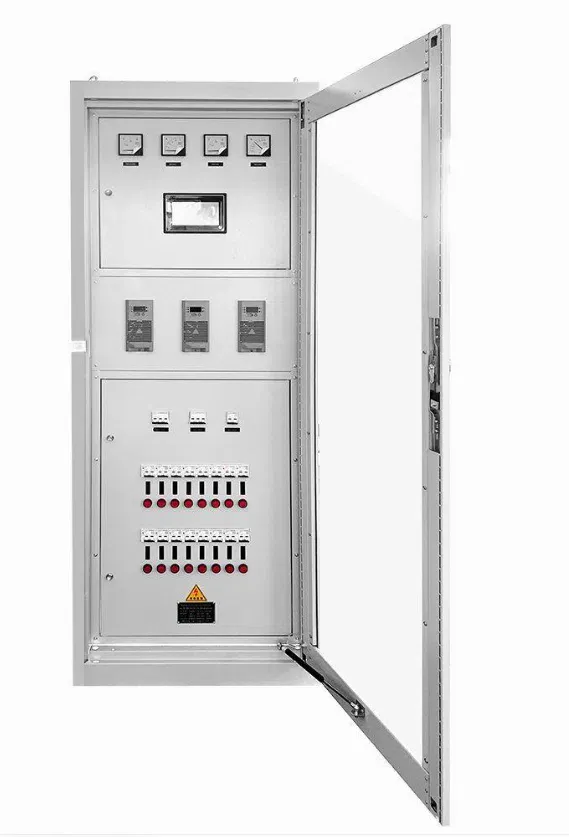
What Is a DC Distribution Panel? Functions, Components, and Applications
A DC distribution panel is an essential electrical distribution device designed to distribute direct current (DC) power safely and efficiently to multiple electrical circuits. It provides circuit protection, power distribution, monitoring, and isolation, making it widely used in photovoltaic (PV) systems, battery energy storage systems (BESS), telecommunications, industrial control systems, marine electrical systems, and power stations.
If you want to understand what a DC panel does in a PV system, what a DC panel consists of, or how to select the right DC distribution breaker panel, this article explains its working principles, key components, and typical applications.
1. What Is a DC Distribution Panel?
A DC distribution panel, also known as a DC power distribution panel, is an electrical cabinet or enclosure that receives DC power from a source, such as a battery bank, solar panels, rectifier, or DC power supply, and distributes it to different outgoing circuits.
Unlike an AC distribution panel, which distributes alternating current, a DC panel is specifically designed for direct current applications. It uses DC-rated circuit breakers, fuses, disconnect switches, and other protective components to ensure reliable operation.
A DC distribution switch panel can be customized according to system voltage, rated current, number of outgoing feeders, and installation requirements.
Common DC system voltages include 24VDC, 48VDC, 110VDC, and 220VDC.
2. What Does a DC Panel Do in a PV System?
In a photovoltaic (PV) system, a DC panel plays an important role in managing and protecting DC power generated by solar modules.
Solar panels generate DC electricity, which needs to be collected, protected, and transferred to the inverter or other electrical equipment.
Depending on the system configuration, DC distribution equipment may perform the following functions:
- Power Distribution: Distributes DC power from solar arrays or DC power sources to designated circuits.
- Overcurrent Protection: Uses DC circuit breakers and fuses to protect circuits against overloads and short circuits.
- Isolation: Disconnects individual circuits for maintenance and troubleshooting.
- Monitoring: Measures voltage, current, and other electrical parameters to help operators monitor system performance.
- System Safety: Helps reduce electrical risks through appropriate protective devices and enclosure design.
For larger PV installations, DC combiner boxes and DC distribution panels may work together. A combiner box collects multiple solar string outputs, while a DC distribution panel provides further power distribution and protection according to the system design.
3. What Does a DC Distribution Panel Consist Of?
The internal configuration of a DC distribution breaker panel depends on its application, voltage level, current rating, and protection requirements.
Typical components include:
1. DC Circuit Breakers
DC-rated circuit breakers protect outgoing circuits from overloads and short circuits. Their rated voltage and breaking capacity must match the DC system requirements.
2. DC Fuses
DC fuses provide additional overcurrent protection for specific circuits and equipment.
3. DC Busbars
Positive and negative busbars distribute DC power to multiple outgoing feeders. Their current-carrying capacity must be selected according to the system load.
4. Measuring Instruments
Meters provide real-time electrical measurements, including DC voltage and current.
For example, a 100 A DC panel meter can be used in a system with a corresponding measurement range and suitable current sensor or shunt. Other monitoring options include 0–1 mA DC panel meters and 1 amp DC panel meters, depending on the instrument signal and measurement arrangement.
5. Disconnect Switches
DC disconnect switches allow operators to isolate circuits during maintenance or emergencies.
6. Surge Protection Devices
Where required, DC surge protection devices help protect electrical equipment against transient overvoltage.
7. Enclosure and Internal Wiring
The enclosure protects internal components from dust, moisture, and mechanical damage. Internal wiring, terminal blocks, insulation supports, and grounding arrangements ensure safe and organized connections.
4. Typical Applications of DC Distribution Panels
DC distribution panels are used in various industries and electrical systems.
Photovoltaic and Solar Energy Systems
DC panels distribute and protect DC power generated by solar modules. They help improve the safety and reliability of solar power installations.
Battery Energy Storage Systems
In battery energy storage applications, DC distribution panels connect battery banks, converters, and other DC loads while providing circuit protection and isolation.
Telecommunications and Data Centers
48VDC distribution panels are commonly used in telecommunications facilities and data centers to distribute power to communication equipment and backup systems.
Power Plants and Substations
110VDC and 220VDC distribution panels provide reliable DC power for protection relays, control circuits, circuit breaker operating mechanisms, and emergency systems.
Marine Electrical Systems
Marine DC distribution panels are used on boats and yachts to distribute 12VDC or 24VDC power to lighting, navigation equipment, pumps, and other electrical loads.
Marine applications may include products such as Blue Sea AC/DC power distribution PN8084 panels or customized DC distribution breaker panels for specific vessels.
5. How to Select the Right DC Distribution Breaker Panel?
Selecting the correct DC panel is essential for electrical safety and long-term system reliability.
Consider the following factors:
- Rated Voltage: Confirm whether the system requires 24VDC, 48VDC, 110VDC, 220VDC, or another voltage.
- Rated Current: Calculate the maximum operating current and select suitable busbars, breakers, and cables.
- Circuit Breaker Rating: Determine the appropriate DC breaker rating based on load current, conductor ampacity, and protection coordination.
- Breaking Capacity: Ensure that the DC circuit breaker's interrupting capacity is suitable for the prospective short-circuit current.
- Number of Outgoing Circuits: Select the appropriate number and rating of outgoing feeders.
- Monitoring Requirements: Determine whether voltage meters, current meters, or remote monitoring functions are required.
- Installation Environment: Consider indoor or outdoor installation, ambient temperature, humidity, and enclosure protection rating.
When asking what size breaker is required for a DC panel, it is important to consider not only the load current but also cable capacity, system voltage, fault current, and the manufacturer's specifications. A breaker should not be selected based on current alone.
6. Customized DC Power Distribution Solutions
Different electrical systems require different DC distribution configurations. A standard DC distribution panel may not meet every project's requirements.
At Shandong Dongguan Electric Co., Ltd., we provide customized DC power distribution solutions for industrial power systems, substations, photovoltaic projects, and other electrical applications.
Our DC distribution panels can be configured with:
- 48VDC, 110VDC, and 220VDC system voltages
- Multiple outgoing feeder circuits
- DC-rated circuit breakers and protective devices
- Voltage and current measuring instruments
- Battery and charger connection arrangements
- Customized cabinet dimensions and wiring configurations
- Technical drawings and project-specific documentation
Whether you need a compact DC distribution switch panel or a complete industrial DC power distribution breaker panel, our engineering team can provide a solution based on your technical requirements.
7. Conclusion
A DC distribution panel is a critical part of many modern electrical systems. It provides DC power distribution, circuit protection, electrical isolation, and monitoring for applications ranging from solar energy and battery storage to telecommunications, substations, and marine electrical systems.
Understanding its functions, components, and selection criteria helps ensure a safe, efficient, and reliable DC power distribution system.
Looking for a reliable DC distribution panel manufacturer?
Contact Shandong Dongguan Electric Co., Ltd. for customized DC distribution panels, technical specifications, and project quotations.
Website: www.dongguanelectric.com