

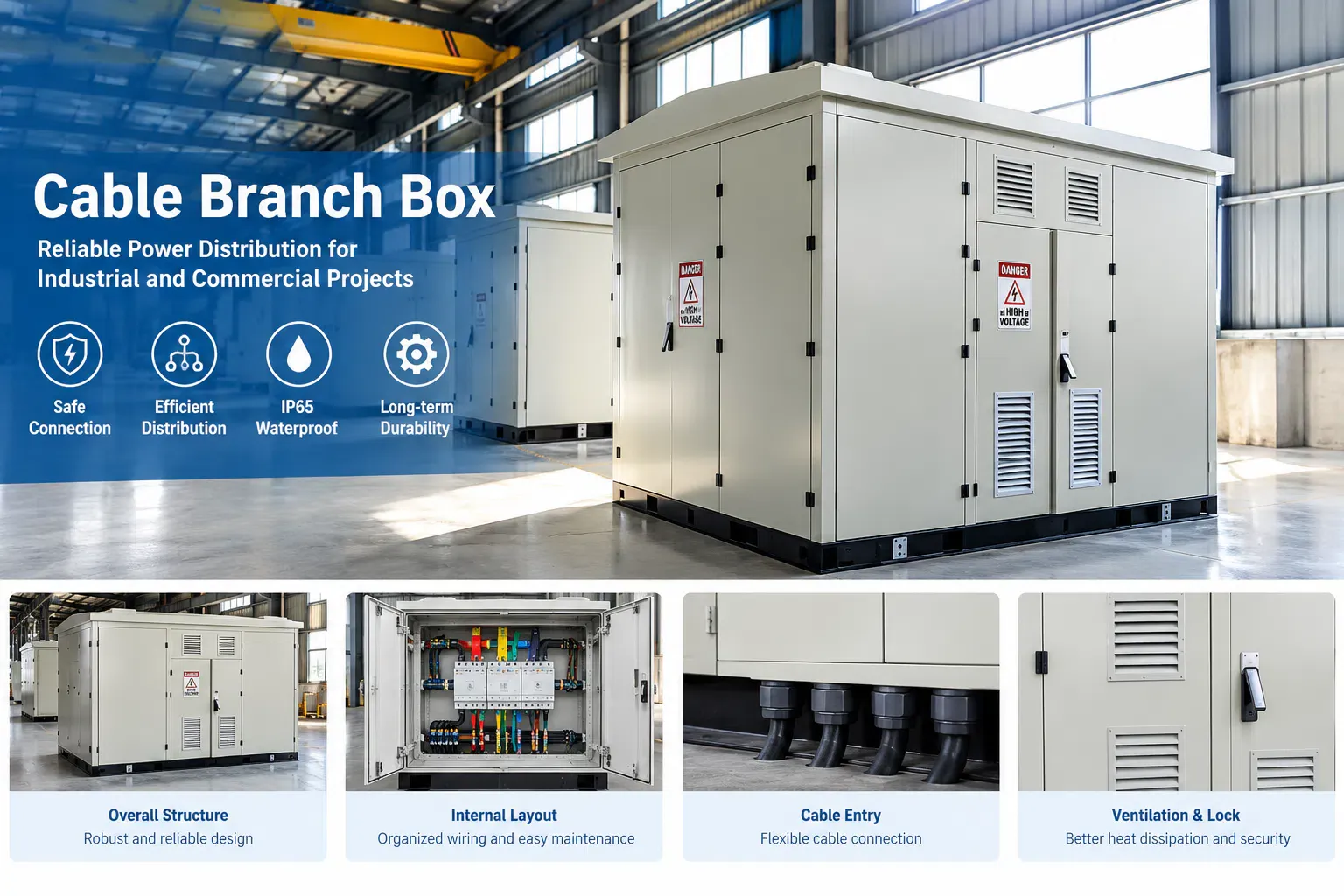
What Is a Cable Branch Box? Functions, Applications, and Selection Guide
A reliable power distribution system depends on safe electrical connections, effective cable management, and dependable distribution equipment. A cable branch box is an important component in many low-voltage and medium-voltage power distribution networks. It provides a convenient way to connect, branch, and distribute electrical cables while helping simplify system installation and maintenance.
But what is a cable branch box, how does it work, and how should you select the right model for your project? This guide explains the functions, applications, types, and key selection factors of cable branch boxes for industrial, commercial, and utility power distribution systems.
1. What Is a Cable Branch Box?
A cable branch box is an electrical enclosure designed to connect incoming power cables to multiple outgoing cable circuits. It allows electrical power to be distributed to different loads or distribution points without requiring every cable to run directly back to the main power source.
Also known as a cable junction box in some applications, a cable branch box can be designed for indoor or outdoor installation, depending on the project requirements. Its configuration may include cable terminals, connectors, busbars, insulating components, and protective enclosures.
For outdoor installations, a waterproof cable junction box can help protect internal electrical connections from rain, dust, and other environmental factors when properly selected and installed.
The design of a cable branch box depends on the rated voltage, current capacity, number of outgoing circuits, cable specifications, installation environment, and applicable electrical standards.
2. Main Functions of a Cable Branch Box
Cable branch boxes perform several important functions in electrical distribution systems.
2.1 Cable Branching and Power Distribution
The primary function of a cable branch box is to distribute power from one incoming cable to multiple outgoing circuits. This arrangement helps supply electricity to several loads or downstream distribution points from a common connection location.
2.2 Cable Connection and Organization
A cable junction box provides an organized space for cable connections. Proper cable arrangement helps simplify installation, inspection, and maintenance while reducing unnecessary cable routing complexity.
2.3 Electrical Insulation and Protection
Depending on its design, a cable branch box incorporates insulating materials and an enclosure to protect electrical connections against accidental contact and environmental exposure. The appropriate protection level must be selected according to the operating conditions and applicable safety requirements.
2.4 Simplified Installation and Maintenance
Using cable branch boxes can help reduce installation complexity and improve the accessibility of cable connection points. For larger projects, standardized equipment can also support easier maintenance and future system expansion.
It is important to note that a basic cable branch box does not necessarily provide circuit switching, overload protection, or short-circuit protection. These functions depend on whether suitable switching and protective devices are incorporated into the design.
3. Common Applications of Cable Branch Boxes
Cable branch boxes are widely used in power distribution and industrial electrical equipment installations.
3.1 Industrial Facilities
Factories, manufacturing plants, and industrial workshops often require power distribution to multiple production areas. A cable branch box provides a practical connection point for distributing power to downstream equipment and local distribution panels.
3.2 Commercial Buildings
Commercial buildings, office complexes, shopping centers, and warehouses may use cable branch boxes to organize electrical connections and distribute power to different areas of a building.
3.3 Outdoor Power Distribution Networks
Outdoor cable branch boxes can be used in distribution networks where underground cables supply multiple loads or electrical facilities. An appropriately designed outdoor enclosure helps protect cable connections from weather exposure and environmental contamination.
3.4 Renewable Energy Projects
Solar power plants and other renewable energy installations may require cable branching and distribution at designated points in the electrical network. The selected equipment must match the system voltage, current, installation conditions, and applicable protection requirements.
3.5 Infrastructure and Utility Projects
Transportation facilities, public infrastructure, utility distribution projects, and other large installations may use cable branch boxes to organize cable connections and simplify network configuration.
The specific design must be compatible with the electrical system and the requirements of the project owner or utility.
4. Cable Junction Box Waterproof: Understanding IP Ratings
Environmental protection is an important consideration when selecting a cable branch box for outdoor use.
A cable junction box waterproof design helps protect internal connections against moisture and environmental exposure. However, the actual protection level depends on the enclosure design, cable entries, seals, installation quality, and specified IP rating.
What Is an IP65 Waterproof Cable Junction Box?
An IP65 waterproof cable junction box provides two types of protection under the applicable IEC 60529 classification:
- IP6X: Dust-tight protection, meaning dust ingress is prevented under the specified test conditions.
- IPX5: Protection against water jets from any direction under the specified test conditions.
An IP65 enclosure is therefore suitable for many outdoor and industrial environments where dust and water jets are expected.
However, IP65 does not mean that the enclosure is suitable for immersion in water. If the installation may be exposed to flooding, standing water, or submersion, a different protection level and a detailed assessment may be required.
When choosing a waterproof cable junction box, buyers should also consider operating temperature, UV exposure, corrosion resistance, enclosure material, cable gland compatibility, and the expected service environment.
For coastal and other corrosive environments, suitable enclosure materials and corrosion-resistant surface treatments can help improve long-term reliability.
5. Types of Cable Branch Boxes
Different cable branch boxes are designed for different electrical systems and installation conditions.
5.1 Low-Voltage Cable Branch Boxes
Low-voltage cable branch boxes are used in electrical distribution systems to connect incoming and outgoing low-voltage cables. Their configurations vary according to current rating, terminal arrangement, cable size, and installation requirements.
5.2 Medium-Voltage Cable Branch Boxes
Medium-voltage cable branch boxes are designed for distribution networks operating at medium voltage. Depending on the application, they may use specialized cable connectors, insulated interfaces, and other components suitable for the rated system voltage.
Medium-voltage applications require particular attention to insulation coordination, clearances, connector compatibility, and electrical safety.
5.3 Indoor and Outdoor Cable Branch Boxes
Indoor cable branch boxes are generally selected for controlled environments, while outdoor models require suitable protection against weather, dust, moisture, and other external influences.
An outdoor model should be evaluated according to its actual installation conditions rather than selected on the basis of the enclosure rating alone.
5.4 Custom-Configured Cable Branch Boxes
Some projects require customized terminal layouts, cable entry positions, enclosure dimensions, materials, or protection arrangements. Custom configurations can help accommodate project-specific installation conditions and technical specifications.
6. Cable Branch Boxes: Applications and Selection Guide
Selecting the right cable branch box is essential for safe and reliable electrical distribution. The following factors should be reviewed before placing an order.
6.1 Rated Voltage and Current
Confirm the system's rated voltage and the maximum expected operating current. All terminals, conductors, connectors, and other current-carrying components must be suitable for the intended application.
6.2 Number of Incoming and Outgoing Cables
Determine how many incoming and outgoing circuits are required. The box must provide sufficient connection points and internal space for the specified cable sizes and bending requirements.
6.3 Enclosure Protection Rating
For outdoor installations, select an appropriate IP rating based on exposure to dust, rain, water jets, and other environmental conditions. An IP65 waterproof cable junction box may be appropriate for certain outdoor applications, but the actual installation requirements must be assessed.
6.4 Enclosure Material and Corrosion Resistance
Consider whether the installation requires painted steel, stainless steel, engineering plastics, or other suitable materials. Coastal areas, chemical plants, and industrial sites may require additional corrosion protection.
6.5 Installation Method and Space Requirements
Check the available installation space, mounting method, cable entry direction, and maintenance access. These details help ensure that the equipment can be installed and serviced safely.
6.6 Standards and Technical Documentation
Verify applicable electrical standards, project specifications, inspection requirements, and required documentation. Depending on the project, documentation may include technical drawings, wiring diagrams, material information, inspection records, and test reports.
An experienced electrical equipment supplier can help review these requirements before production.
7. Cable Branch Box vs. Cable Junction Box
The terms cable branch box and cable junction box are sometimes used interchangeably, but their meanings can vary by industry, region, and manufacturer.
A cable junction box generally refers to an enclosure that houses electrical cable connections or splices. A cable branch box more specifically emphasizes the distribution of an incoming cable to multiple outgoing circuits.
In practice, the distinction depends on the product design and intended application. Buyers should confirm the internal configuration, terminal arrangement, rated voltage, current capacity, and protective functions instead of relying on the product name alone.
A waterproof cable junction box may be suitable for simple cable connections, while a cable branch box intended for power distribution may require larger terminals, additional outgoing circuits, or specialized insulation and connection components.
8. Why Choose a Professional Electrical Equipment Supplier?
Choosing the right supplier is just as important as selecting the correct product specifications. A professional supplier should be able to evaluate application requirements, recommend an appropriate configuration, and provide technical support throughout the procurement process.
At Shandong Dongguan Electric Co., Ltd., we provide power equipment solutions for industrial and utility applications, including transformers, medium- and low-voltage switchgear, and power quality equipment.
For cable distribution projects, our team can review your system requirements and help identify the appropriate equipment configuration according to the project scope, voltage level, installation environment, and applicable standards.
To support an accurate technical assessment, buyers are encouraged to provide the following information:
- Rated voltage and operating current
- Number and size of incoming and outgoing cables
- Indoor or outdoor installation conditions
- Required IP protection rating
- Enclosure material and mounting method
- Applicable standards and project documentation requirements
These details help establish the technical requirements before quotation and equipment selection.
Conclusion
A cable branch box is an important component for organizing cable connections and distributing electrical power across industrial, commercial, infrastructure, and utility applications. Understanding its functions, application scenarios, and technical requirements helps buyers make better equipment selection decisions.
Whether you need a standard cable junction box, a waterproof cable junction box, or an IP65 waterproof cable junction box for a specific outdoor application, the correct selection should be based on electrical ratings, environmental conditions, connection requirements, and applicable standards.
For professional support with your electrical distribution project, contact Shandong Dongguan Electric Co., Ltd. to discuss your application and technical requirements.
Contact our team today to explore suitable power distribution solutions for your project.