

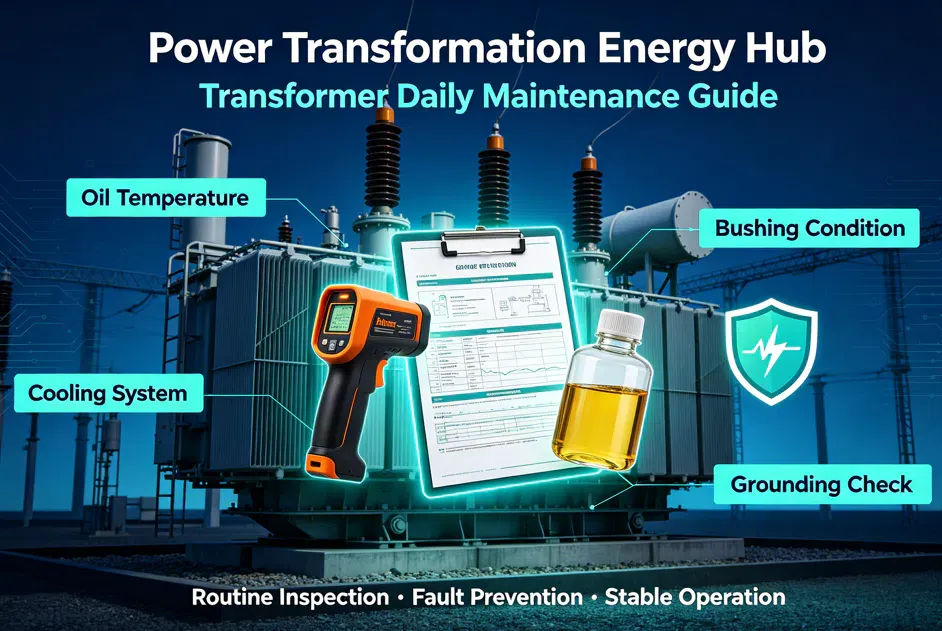
Daily common knowledge about transformers mainly covers operating environment monitoring, inspection points, load management, and abnormality identification. For non-professionals, the key points are to avoid touching, maintain a safe distance, and recognize obvious faults; for operation and maintenance personnel, attention should be paid to core indicators such as oil level, temperature, and sound.
Below are the key points of common knowledge for daily transformer operation:
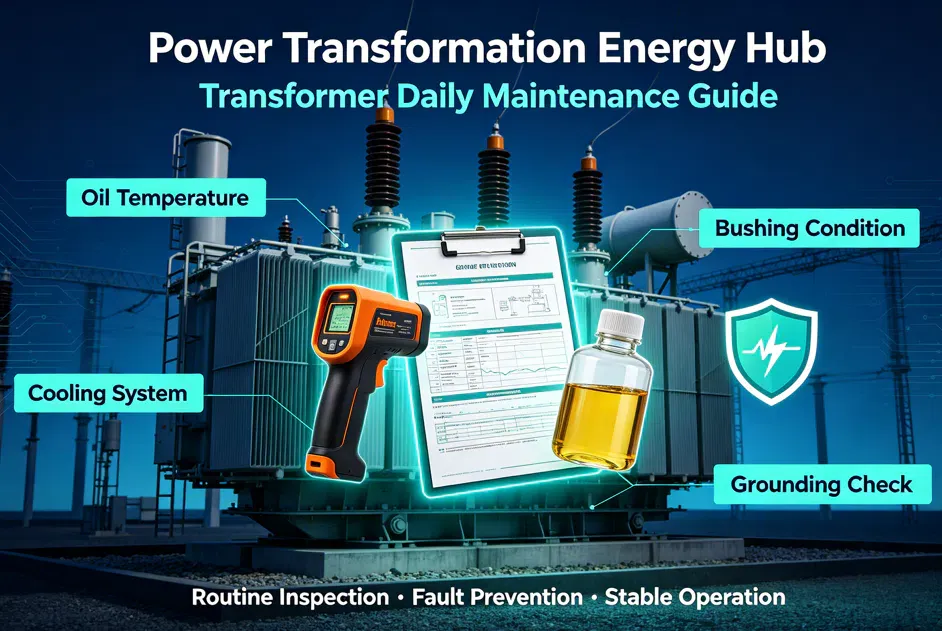
1. Basic Structure and Principle Knowledge
· Core Function: A transformer is a static device that works on the principle of electromagnetic induction. It is mainly used to change the magnitude of AC voltage to enable the transmission and distribution of electrical energy.
· Main Components: It consists of a core (magnetic circuit), windings (electrical circuit), insulating oil (cooling and insulation), tank, and bushings.
· Grounding Requirements: The transformer's enclosure, core, and neutral point must be reliably grounded to prevent electric shock from leakage or induced voltage.
2. Daily Inspections and Checks (Five-Senses Inspection Method)
Daily inspections mainly assess equipment condition through visual, auditory, and olfactory checks:
· Look (Appearance):
o Oil Level: The oil level in oil-immersed transformers should be between 1/2 and 2/3 of the oil gauge. Too high may cause oil spillage, while too low may lead to insulation moisture ingress.
o Color: The desiccant in the silica gel breather should be blue. If it turns pink, it indicates moisture absorption and needs timely replacement.
o Leakage: Check the tank welds and flange connections for oil seepage or leakage.
· Listen (Sound):
o Normal Sound: A steady "hum" (50Hz or 100Hz AC sound).
o Abnormal Sound: If there are "crackling" discharge sounds, "bubbling" boiling sounds, or heavy "groaning" sounds, it usually indicates internal faults (such as partial discharge, inter-turn short circuits, or overload).
· Smell (Odor): Normal operation has no unusual odor. If a burning smell or ozone smell is detected, it may indicate overheating or breakdown of insulating materials.
· Measure (Temperature): The top oil temperature should generally not exceed 85°C (refer to the nameplate for specifics). Excessive temperature rise accelerates insulation aging.
3. Safety Operation Red Lines
· Strictly No Overloading: Long-term overload operation generates high temperatures, which can cause insulating oil degradation, shorten transformer life, and even lead to fires.
· Power-Off Operation Sequence: First, open the low-voltage load switch, then open the low-voltage main switch, and finally open the high-voltage drop-out fuse. The power-on sequence is the reverse.
· Safety Distance: Climbing on transformers is strictly prohibited regardless of whether they are energized or not. Non-professionals are not allowed to enter the enclosure area.
4. Common Abnormalities and Handling
· Light Gas Alarm: Usually caused by air ingress or minor faults generating gas. Enhanced monitoring is required, and gas samples should be taken for analysis.
· Explosion-Proof Tube Diaphragm Rupture: Indicates a sharp increase in internal pressure. The transformer must be immediately taken out of service for inspection.
· Bushing Flashover: Caused by surface contamination or cracks leading to discharge. Requires power-off cleaning or replacement.