

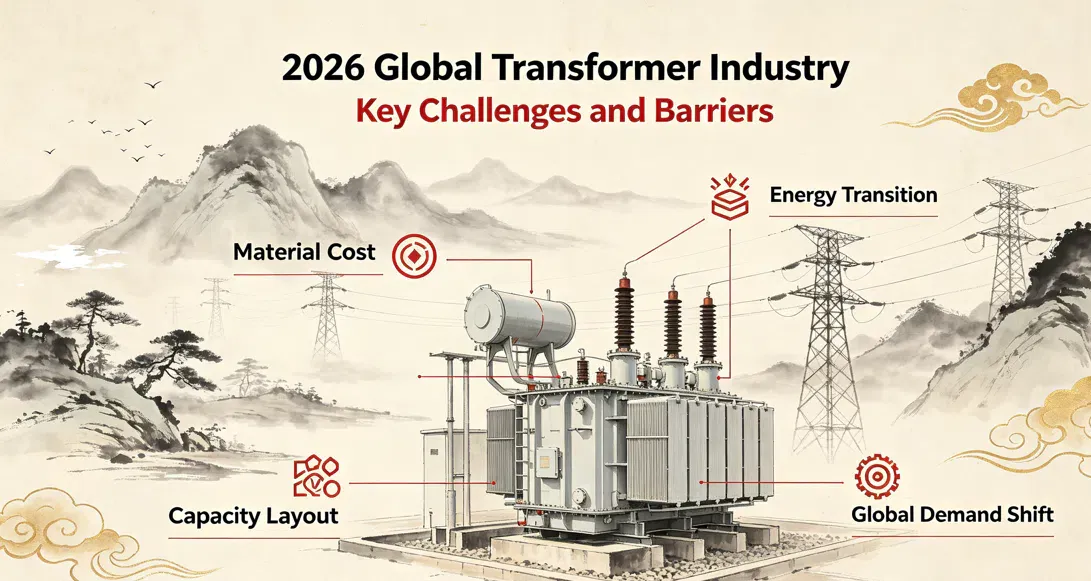
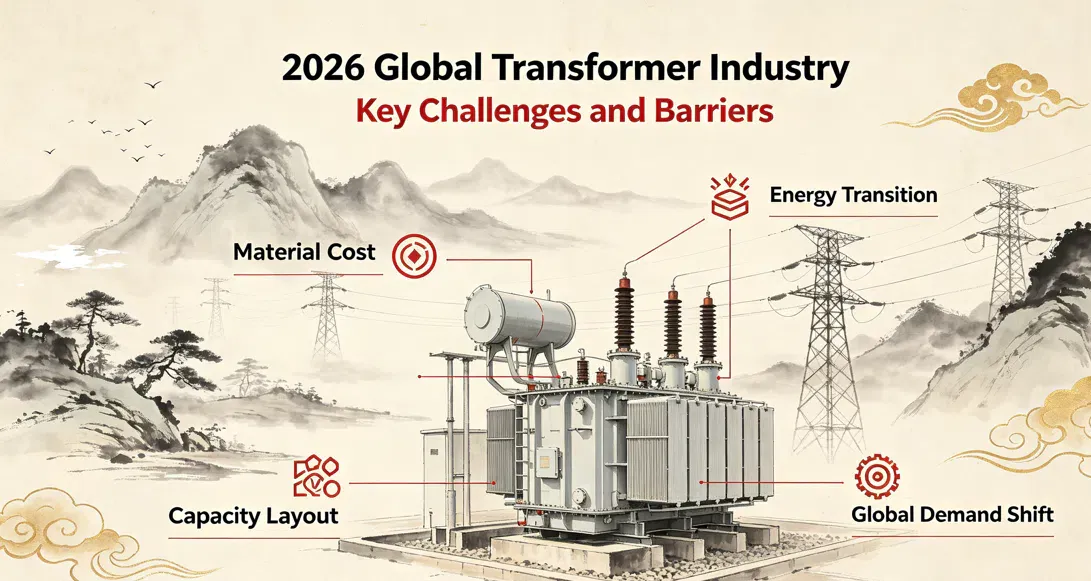
Although China’s transformer industry has successfully transitioned from a major manufacturing nation to a global leader in intelligent manufacturing, it still faces a number of significant challenges.
One major challenge is the pressure of raw material costs. More than 60% of transformer production costs are attributable to core materials such as copper and grain-oriented electrical steel. The global supply-demand imbalance and technological barriers associated with these materials continue to drive production costs upward. In particular, the supply of grain-oriented electrical steel remains tight, while copper prices have entered a cyclical upward trend, creating substantial cost pressure for manufacturers.
Technological advancement also presents significant hurdles. Challenges remain in the localization of high-voltage-grade materials, while further breakthroughs are needed in environmentally friendly materials and long-term reliability verification. At the same time, next-generation technologies such as solid-state transformers require significant R&D investment, and bridging the gap between laboratory innovation and large-scale commercial deployment remains a critical obstacle.
International competition is becoming increasingly intense, particularly in the development of global technical standards. Established industry leaders continue to dominate standard-setting in emerging fields such as hydrogen-compatible transformers and superconducting technologies. Although leading Chinese manufacturers are actively participating in international standardization efforts and moving from followers toward industry leaders, competition for influence over future technical standards remains fierce. In addition, lifecycle carbon emissions management is expected to become another key factor determining long-term competitiveness.
Market competition is also evolving rapidly. In product segments with relatively low technological barriers, price competition remains severe. Meanwhile, competitive advantages are increasingly determined by technological innovation, manufacturing efficiency, delivery capability, and global service networks. Companies with strong core technologies, rapid-response capabilities, and international market presence are expected to strengthen their positions, while smaller manufacturers with limited technological differentiation and fragmented production capacity may face consolidation or exit from the market.
Supply-chain resilience and talent development remain essential priorities. The supply chains for certain critical components are still geographically concentrated, highlighting the need to improve localized supporting capabilities. At the same time, the industry must strengthen supply-chain integration, foster a more collaborative industrial ecosystem, and cultivate highly skilled technical professionals to support long-term growth.
Finally, geopolitical uncertainty continues to pose significant risks. Ongoing changes in the global trade environment, evolving regulations, and geopolitical tensions create additional uncertainty for export-oriented manufacturers, making international market expansion increasingly complex and challenging.