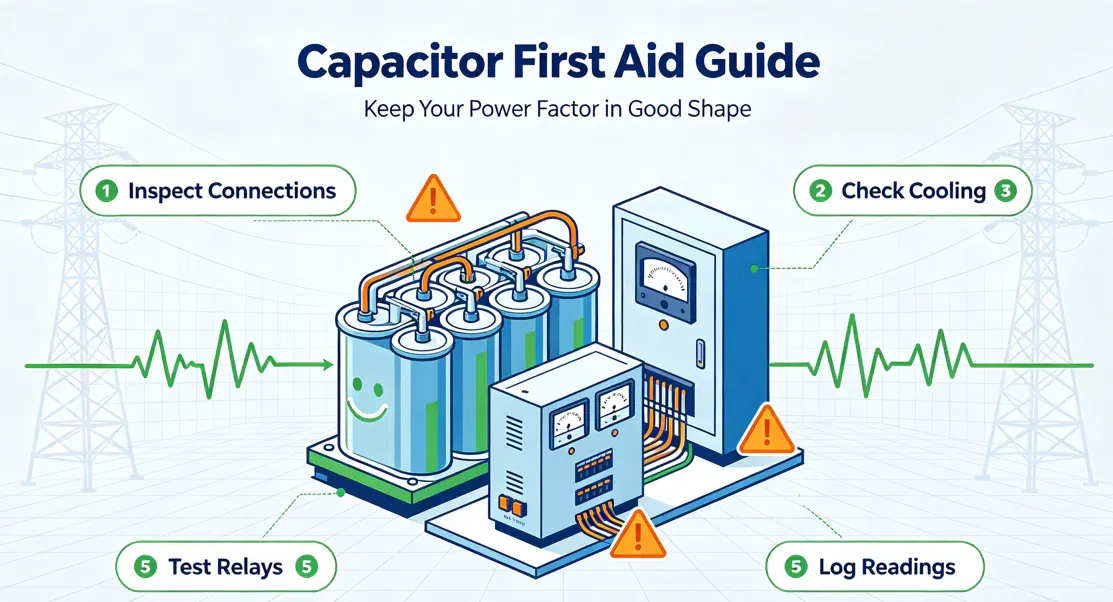

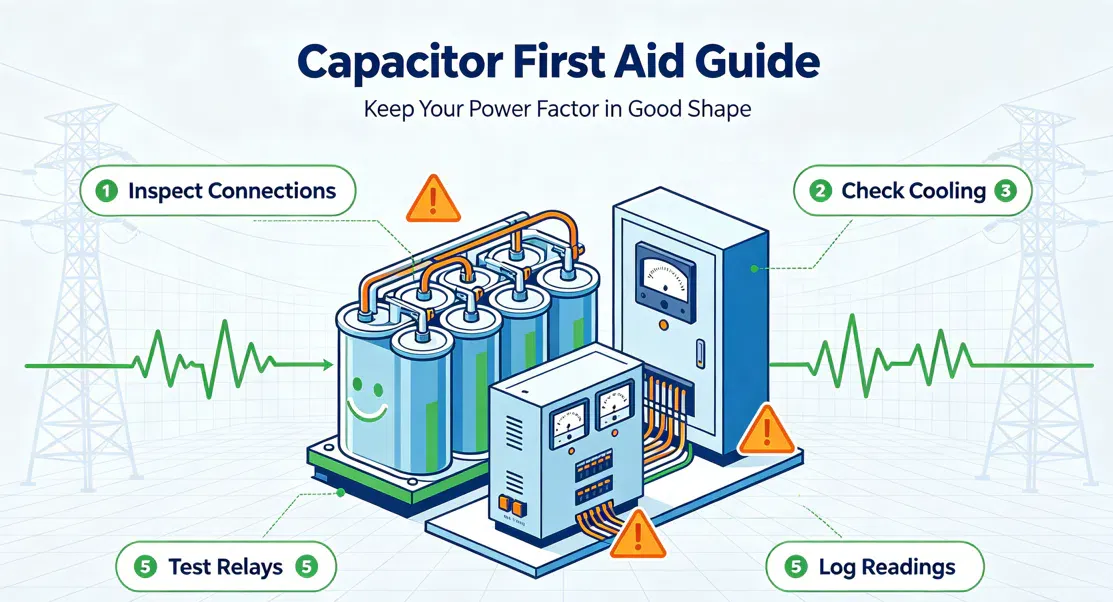
As the core of reactive power compensation systems, low-voltage capacitors require daily maintenance that is not only crucial for stable equipment operation but also key to ensuring electrical safety. The following are essential daily maintenance tips for low-voltage capacitors, organized into five dimensions: inspection, temperature control, cleaning, testing, and safety.
1.Daily Visual and Operational Inspection
Visual Inspection: During daily rounds, pay close attention to the capacitor casing for any deformation, bulging, cracks, or signs of oil leakage/seepage.
Listening: Capacitors in operation should remain quiet. If you hear abnormal noise or vibration, it usually indicates internal defects.
Indicator Check: Verify that the three-phase indicator lights are functioning properly and that the controller's power indicator, overvoltage/overcurrent alarm status are normal.
2.Environmental and Temperature Control
Strict Temperature Management: Temperature is the "lifespan consumer" of capacitors. The operating environment temperature should not exceed 40°C; special attention is needed during high summer temperatures.
Ensure Proper Ventilation: Make sure there is no debris accumulation within 1 meter around the capacitor cabinet and that ventilation openings are not blocked. If the cabinet is equipped with forced ventilation fans, check that they are operating correctly.
Temperature Monitoring: Regularly use an infrared thermometer to measure the temperature of busbar terminals, capacitor terminals, and contactor contacts. The maximum temperature should not exceed 70°C.
3.Cleaning and Connection Tightening
Regular Dust Removal: Dust accumulation can cause electrostatic short circuits or impair heat dissipation. Regularly clean dust off capacitor casings, porcelain bushings, and brackets using anhydrous compressed air or a soft cloth (Note: Cleaning must be carried out with the power off).
Tighten Connections: After capacitors are put into operation, regularly check all connection points and terminal screws for looseness. Poor contact is a common cause of equipment heating and even burnout.
4.Electrical Parameter Testing
Three-Phase Current Balance: When capacitors are in operation, the three-phase currents must be essentially balanced (allowable deviation ≤10%). Excessive deviation indicates that the capacitor or contactor may be faulty.
Capacitance Decay Testing: Regularly measure the capacitance value using specialized instruments (such as an LCR bridge). If the capacitance decay exceeds 10%, the capacitor is considered failed and must be replaced.
5.Safe Operation and Fault Handling
Power-Off and Discharge: Before performing any maintenance operations, the power supply must be disconnected. Due to the energy storage characteristics of capacitors, after power-off, you must wait for complete discharge and ensure no residual charge remains before touching.
Trip Handling: When a capacitor bank trips, do not blindly re-close immediately. The cause of the trip must first be identified and the fault resolved before re-energizing.
Timely Replacement: Once a capacitor shows signs of bulging, oil leakage, fire, or significant capacity decay, it should be immediately taken out of service and replaced as soon as possible to prevent more serious system accidents.